
Why You Need a Roof Inspection for Spring

Most Maryland homeowners don't think about their roof until something goes wrong, and by then, the damage has already been done. Spring is your best opportunity to get ahead of problems before they become emergencies. A thorough roof inspection spring checkup takes the guesswork out of your roof's condition after a season of freeze-thaw cycles, ice dams, and wind-driven debris. This guide covers what to look for, when to schedule, and how to know whether your roof needs a repair or a full replacement.
Why Spring Is the Most Critical Season for Your Roof
Winter is the harshest season your roof faces all year, and the damage it leaves behind isn't always obvious from the ground. The reasons spring inspection matters so much come down to timing, material science, and practical logistics.
Winter Leaves Hidden Damage
Snow loads, ice dams, and wind-driven debris all stress your roofing system in ways that don't always show up until temperatures warm up. What looks fine from the curb in February may have compromised shingles, lifted flashing, or saturated decking that only becomes apparent once a spring rain hits.
Freeze-Thaw Cycles Compromise Materials
Every time temperatures drop below freezing and climb back above it, water expands inside micro-cracks in your shingles, sealants, and flashing. Over a single Maryland winter, that cycle can repeat dozens of times, slowly widening gaps that were too small to notice when the season started.
Summer Storms Are Coming
Maryland's summer storm season brings heavy rain, high winds, and the occasional hail event, all of which will find and exploit any weakness winter left behind. A cracked pipe boot seal or a few lifted shingle tabs that seem minor in April can become an active leak by July.
Contractor Availability Won't Last
Spring is one of the few windows when roofing contractors still have availability before summer demand peaks. Once homeowners start calling in June and July, schedules fill fast, and any damage identified during a spring roof inspection could sit unaddressed for weeks longer than necessary.
Spring Roof Inspection Checklist: What to Look For
A proper roof inspection spring checkup covers more than just the shingles you can see from the driveway. Knowing which areas are most vulnerable after winter helps you prioritize what to check and what to flag for a professional.
Attic Moisture and Ventilation

Poor attic ventilation traps heat and moisture against the underside of your roof deck, accelerating shingle deterioration from the inside out. Dark staining on rafters, condensation on the roof deck, or damp-feeling insulation are all signs that your ventilation system isn't doing its job.
Flashing Around Chimneys and Vents
Flashing is the metal seal that bridges the gap between your roof surface and any vertical penetration, such as chimneys, skylights, vents, and pipe boots. It's also one of the first things to fail after repeated freeze-thaw cycling, so look for lifted edges, cracks in the sealant, or visible gaps where the flashing meets the surface.
Sagging or Uneven Roof Sections
Any visible dip, wave, or sag in your roofline points to a structural issue rather than a surface one, typically compromised decking or rafter damage from sustained moisture exposure. This is one of the most serious findings a spring inspection can turn up, and it warrants an immediate professional evaluation.
Gutter Buildup and Drainage Issues
Gutters clogged with winter debris force water to back up against your fascia and underlayment, creating moisture intrusion points that are easy to miss until they've caused real damage. Check for sagging sections of the gutter, granule accumulation at downspouts, and any separation between the gutter and the roofline.
Soft Spots or Structural Weakness
Walking the roof, or having a professional do so, can reveal soft spots where the decking beneath the shingles has been weakened by moisture. These areas compress underfoot in ways solid decking doesn't, and they signal rot or delamination that won't improve without intervention.
Why the Attic Is an Essential Part of Any Spring Roof Inspection
The attic is where winter's hidden damage first shows itself. Before you ever look at the roof surface, go into your attic on a bright day with the lights off and look for daylight coming through the roof boards. Any pinhole of light is a gap that water can exploit.
Beyond that check, look for:
Water stains or dark streaking on rafters and roof sheathing, which indicate active or past leaks
Wet, compressed, or discolored insulation, which signals moisture intrusion
Mold or mildew growth on wood surfaces, appearing as black or green patches, a sign of a ventilation or moisture problem that needs immediate attention
Condensation on the underside of the roof deck or a noticeably overheated attic in mild spring weather, both signs of inadequate ventilation
Signs of pest intrusion, such as gaps in the roof deck or soffit, can allow rodents and insects to enter, and their presence often signals openings that water can use as well.
Attic findings often point directly to the location of a roof surface problem, making this step one of the most valuable parts of any spring roof inspection for homeowners to complete before calling a contractor.
How Often Should You Schedule a Spring Roof Inspection?

At a minimum, schedule a professional roof inspection once per year. If your roof is older than 10 years, has a prior repair history, or your home is in a region with harsh winters, twice a year is the smarter standard: spring and fall.
Consider these factors when deciding how often to schedule:
Roof age: An asphalt shingle roof in its first decade typically weathers winter without major issues. Once it hits the 15- to 20-year mark, granule loss accelerates, sealant strips have cycled through hundreds of freeze-thaw events, and the risk of finding something serious in the spring increases considerably.
Roof material: Metal and tile roofs tend to be more durable but still require periodic assessments because their flashing, fasteners, and sealants all degrade over time. Asphalt shingles require the most consistent monitoring, given how directly they respond to temperature cycling.
Warranty requirements: If your roof is under a manufacturer's warranty, that warranty may have inspection requirements built in; skipping documented inspections can void coverage in ways that aren't apparent until you file a claim
Insurance documentation: Insurance companies increasingly require documented inspection history before processing claims for roof-related damage, so keep records of every inspection, including who performed it and what was found
To understand how that timeline connects to your roof's overall lifespan, see our guide on roof replacement frequency.
The True Cost of Skipping Your Spring Roof Inspection
The importance of spring roof inspections becomes clear when you compare costs side by side. A professional residential roof inspection typically runs between $150 and $400. That's the cost of identifying problems while they're still small.
Here's what those same problems cost when they're caught late:
Damaged decking from prolonged moisture exposure: $500 to $1,500 or more to replace
Full leak repair, including interior damage remediation: $1,000 to $4,000, depending on extent
Premature full roof replacement driven by deferred maintenance: $8,000 to $20,000 or more for a residential home
When a Spring Inspection Leads to More: Repair vs. Replacement
When your inspection turns up significant findings, the next question is whether you're looking at a repair or a full replacement. Understanding the benefits of spring roof replacement can help frame that decision before you sit down with a contractor.
Roof Age Relative to Expected Lifespan
Standard asphalt shingles last 20 to 30 years. If your roof is within 3 to 5 years of the end of its expected life, investing $3,000 in repairs often delays an inevitable replacement by only a year or two. A full replacement on your own timeline is more cost-effective than an emergency replacement driven by failure. Manufacturer-certified replacements, like those Restoration Roofing Co. installs, backed by 25-year labor and 50-year material warranties, change the value calculation significantly compared to a standard replacement with limited coverage.
Extent of Damage
Isolated damage, a few shingles around a chimney or one section of flashing, points toward repair. Widespread granule loss, multiple areas of lifted shingles, or decking damage in more than one location point toward replacement.
The 50% Rule
If the cost of repairs exceeds 50% of the cost of a full replacement, replace. You're paying most of the price without getting a new roof or the warranty protection that comes with it.
How Restoration Roofing Co. Handles Spring Roof Inspections in Maryland
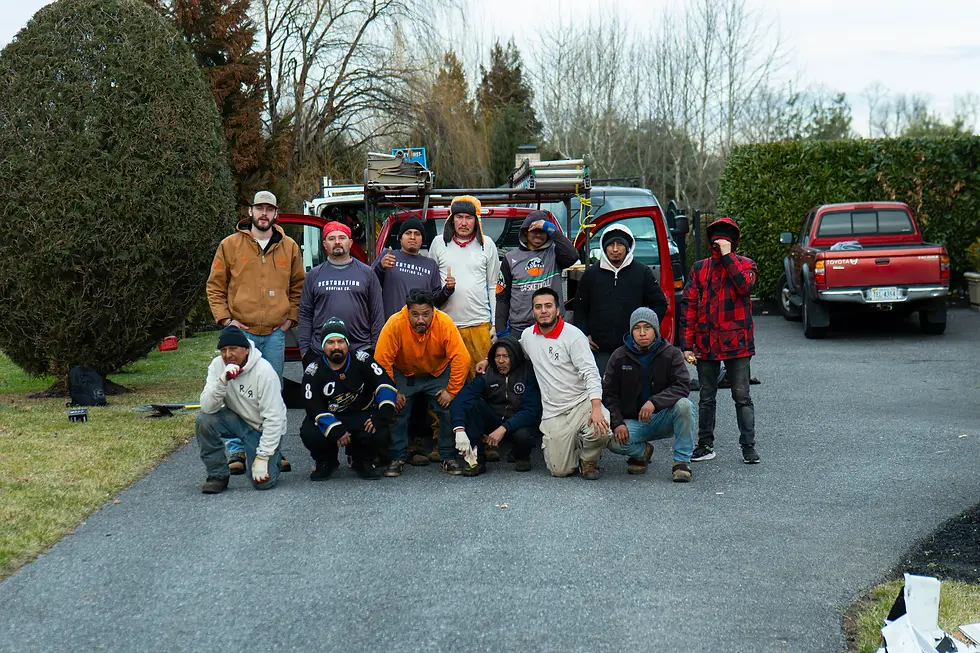
If your spring roof inspection raises concerns, or if you just want a certified professional to assess your roof before the summer storm season, we're the roofing contractor in Maryland that homeowners trust.
Restoration Roofing Co. is a CertainTeed SELECT ShingleMaster-certified contractor, ranked in the top 3 out of 2,500 CertainTeed contractors in Maryland, and every evaluation we perform is backed by years of hands-on experience with the specific conditions that Maryland winters create.
When we assess your roof, we're not looking for a reason to upsell you. We look at the full picture, shingles, flashing, decking, attic conditions, and drainage, and give you an honest read on where things stand.
If a repair is the right call, we'll tell you. If the findings point toward a full replacement, we'll walk you through exactly why and what a manufacturer-backed replacement with a 25-year labor and 50-year material warranty would mean for your home in the long term.
Spring scheduling fills up fast. Call us at 410-489-7663 or book your free roofing estimate today and get an expert set of eyes on your roof before summer storms arrive.


