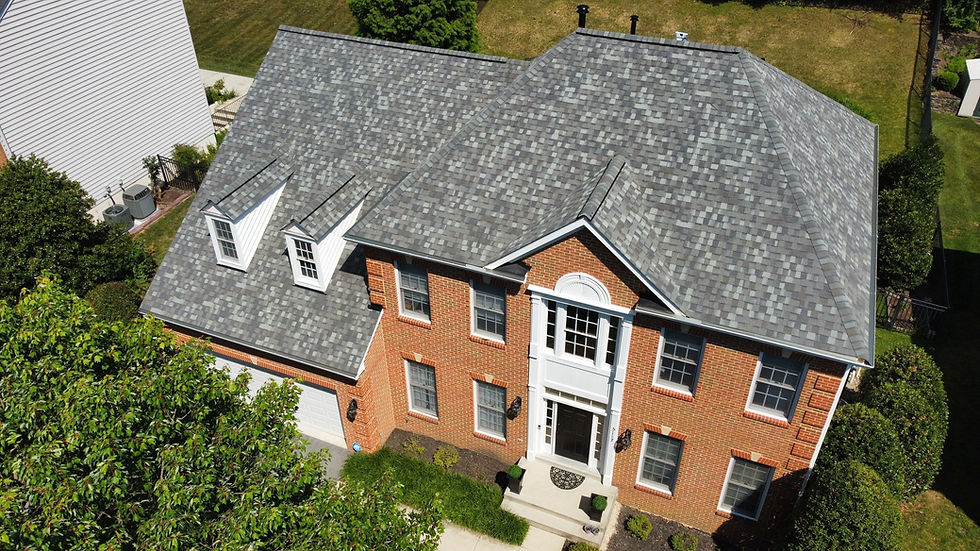
How to Find Out When My Roof Was Replaced
- Toni Interiano
- Jun 15
- 5 min read

TL;DR: Knowing how to find out when your roof was replaced protects your insurance coverage, home equity, and sale negotiations. Start by asking the previous owners, then check your home purchase documents, pull building permit records, look up warranty paperwork, and finish with a visual inspection for physical age clues.
If you've recently bought a home or you've owned yours for decades and lost track, the question “how to find out when my roof was replaced” is common. The good news is that there are several reliable ways to track down this information, even if you have no paperwork. Here's exactly how Maryland homeowners find out when their roof was replaced.
Why Knowing Your Roof's Age Actually Matters
Three reasons this information is worth tracking down.
Home Sale and Buyer Negotiations: Buyers and their agents will ask about roof age. If you're not sure whether your roof is original to the house or was ever replaced, that uncertainty has real financial consequences; an unverified answer is a red flag that can stall a sale or weaken your negotiating position.
Insurance Coverage: Insurers use roof age to determine whether to pay the replacement cost value (RCV) or the actual cash value (ACV) after a claim. Most make that switch somewhere between 10 and 20 years. An undocumented or older roof can also trigger higher premiums or non-renewal.
Replacement Planning: Knowing your roof's age lets you plan roof replacement early, and with home prices up 2.8% from May 2024 to May 2025 (FHFA), a documented, well-maintained roof protects real equity. Most asphalt shingle roofs last 20–30 years; knowing when yours was installed tells you exactly where you stand.
How to Determine When Your Roof Was Last Replaced
Each one of these steps gets you closer to a confirmed replacement date.
Ask the Previous Owners
If you bought your home in the last 5-10 years and the previous owners are reachable, a simple phone call or email can save you a lot of time. Most homeowners are happy to share what they know, especially if it was a significant project they paid for themselves.
Check Your Home Purchase Documents
When you purchased your home, your closing package likely included a home disclosure statement from the seller. Most states, including Maryland, require sellers to disclose known material facts about the property, which often include major renovations, such as a roof replacement.
Look through your:
Seller's disclosure form: Sellers are legally required to disclose known roof work
Home inspection report: Your inspector may have estimated the roof's age or noted a recent replacement
Settlement documents: Any credits or allowances given at closing for the roof condition will be referenced here
This is the fastest starting point and requires no phone calls or office visits.
Pull Building Permit Records
In Maryland, a full roof replacement typically requires a building permit from the county. This is the most accurate paper trail available; it records the date the permit was issued, the scope of work, and the contractor who pulled it.
Here's how to find it by county:
Howard County: contact the Howard County Department of Inspections, Licenses, and Permits (DILP)
Montgomery County: Permits are searchable through Montgomery County's online permitting portal
Frederick County: Frederick County Building Division maintains public permit records
You'll need your property's street address and possibly the parcel ID (found on your property tax bill). Many counties now offer online lookup tools, so this can often be done in under 10 minutes.
One caveat: Permits are issued when work begins, not when it's completed. The actual installation date may be weeks after the permit date.
Look Up Warranty Documents
Check attic storage for warranty paperwork. Manufacturer warranties are registered by installation date; that date is your proof of when the roof was installed. If you can find the shingle brand or model, often printed on packaging stored in the attic or stamped on the back of the shingles, call the manufacturer directly. Some offer online warranty lookup tools tied to the original registration date.
Do a Visual Inspection for Age Clues

From the ground with binoculars, look for curling or cupping shingle edges (common around years 12–15), granule loss exposing bare asphalt, moss or algae growth, or visible sagging. From the attic, check for daylight through boards, water stains, or multiple shingle layers visible at the eaves.
Two layers of shingles means the roof may look newer than the actual roofing system underneath, a complication that's easy to miss. ASHI recommends starting your twice-yearly roof check in the attic, and for good reason: this is where age shows up first.
What to Do When You Can't Find Any Documentation
Documentation gets lost. Permits from 20-plus years ago often weren't digitized. Previous owners don't always disclose what they know. If you still can't identify when your roof was last replaced after working through every step, here's what to do next.
Contact Previous Roofing Contractors
Roofing companies keep job records, invoices, and copies of permits. To identify the contractor, check the attic for leftover materials bearing the company's stickers, inspect vents or flashing for installer markings, or ask neighbors if they recall who did the work. Once you have a name, contact them directly, or search their license history through your state contractor licensing board.
Compile a Combination of Evidence
If no single source confirms the date, gather what you have: visual evidence, satellite imagery, neighbors' recollections, partial records. Together, a professional inspector's report and historical imagery are typically sufficient for insurance and real estate transactions.
Get a Professional Roof Inspection
A certified roofing contractor can inspect your roof and give you a reliable estimated age based on physical evidence, no paperwork required. An experienced roofer will assess:
Granule Loss: Bare patches or granule buildup in your gutters indicate an aging shingle surface
Shingle Type: 3-tab shingles (now mostly phased out in favor of architectural shingles) suggest the roof predates the mid-2000s; if you have 3-tab, your roof is likely 15+ years old at minimum
Curling and Cupping: Shingle edges that curl upward (cupping) or curl downward at the tips (clawing) indicate advanced weathering
Flashing Condition: Original flashing that hasn't been updated is a strong indicator of an older installation
A professional inspection isn't just about determining age; it gives you an honest picture of the roof's actual condition and whether replacement is imminent. See our post on what to expect during a spring roof inspection for more on what a thorough assessment covers.
How Restoration Roofing Co. Helps Maryland Homeowners Navigate This

When homeowners across Howard County, MD, and the surrounding area call Restoration Roofing Co., one of the first questions we ask is: do you know how old your roof is?
Many don't. That's completely normal, and it's exactly why we offer free roofing evaluations. When Jose and the team come out to assess your home, they'll give you a clear picture of:
The estimated age and condition of your current roof
Whether you have any remaining warranty coverage (and from whom)
How much life is realistically left in your existing installation
What a full replacement would cost, and what product options are available for your home
As one of the top three CertainTeed SELECT ShingleMaster-certified contractors out of approximately 2,500 CertainTeed contractors statewide, Restoration Roofing Co. is qualified to issue the highest warranty coverage available: a 25-year labor warranty and up to a 50-year material warranty through CertainTeed. That's not a warranty most Maryland roofers can even offer.
The Bottom Line on Roof Age
Knowing when your roof was replaced is a practical piece of information that affects your insurance premiums, your home's resale value, and how urgently you need to be planning for what comes next.
If you've worked through the methods above and still can't pin down an exact date, don't stress. A professional inspection will give you something more useful than a date anyway: an honest assessment of how much life your roof actually has left, regardless of when it was installed.
Schedule a free roof inspection with our trusted roofing contractor in Maryland. We'll assess your roof's current condition, estimate its age, and give you a clear, honest picture of what you're working with.